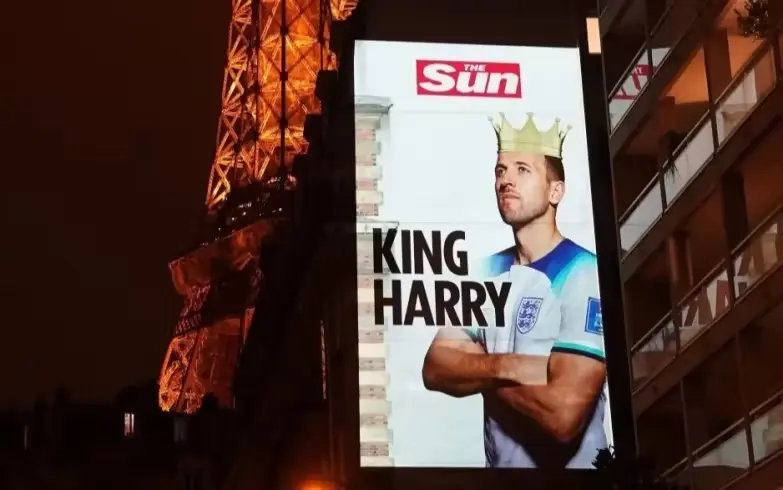
Ahead of the 2022 World Cup quarter-final between France and England, British tabloid The Sun launched a provocative advertising campaign in the heart of Paris. Known for its sensationalist style and provocations, The Sun did not disappoint by installing mocking posters in iconic locations across the French capital, including in front of the Eiffel Tower. But what initially appeared to be a well-orchestrated communication move to wind up French fans quickly backfired after England's defeat, triggering a wave of mockery on social media in which The Sun was rechristened "The Seum".
A strategic provocation before the match
The Sun's campaign falls within a well-established tradition of taunting between rival nations, particularly when it comes to football. By launching this campaign in Paris, The Sun aimed to prick the pride of French supporters, playing on the tension and excitement surrounding the match. The concept of "chambrage" — playful taunting — takes on its full meaning here, as The Sun adopted a provocative and insolent tone to ramp up pressure before the game.
This strategy, though risky, is built on the idea that public engagement — even negative — is a victory in itself. The Sun banked on social media's reactivity to amplify the buzz around its actions, knowing that every response from French supporters would only add to the campaign's notoriety. By directly provoking French fans on their own turf, the publication hoped not only to provoke outrage but also to capture international attention, turning a simple local campaign into a viral phenomenon.
The plot twist: from "The Sun" to "The Seum"
However, after France's victory over England, this campaign took an unexpected turn. Rather than being destabilised, French supporters decided to turn the mockery back on The Sun. The word "seum" — French slang for deep, bitter disappointment mixed with frustration — was cleverly used to rename the tabloid "The Seum", signalling that it was now the British who had to feel that frustration after their defeat.
This reversal shows just how quickly social media can flip a communication campaign on its head. What was initially a taunt directed at the French became a global joke at The Sun's expense. On Twitter, memes and sarcastic comments multiplied, amplifying the reach of this humorous counter-attack. This phenomenon illustrated the power of online communities to reclaim a message and turn it to their advantage.
An example of the impact of confrontational marketing
The Sun's campaign, and the reaction that followed, perfectly illustrates the risks and rewards of confrontational marketing. By choosing to deliberately provoke an opponent, a brand or media outlet can attract attention and create buzz — but this approach also carries significant risk if the final outcome does not go as planned.
In this case, The Sun managed to draw attention, but at a price: the plot twist showed that in a context where social media plays a dominant role, control of the narrative can slip away from the campaign's initiator. This type of marketing often rests on a delicate balance between provocation and narrative control — a balance The Sun lost after England's defeat.
A prolonged impact on social media
Although The Sun's campaign initially provoked outrage in France, it was ultimately the French supporters' reclaiming of the message that made the event go even more viral. The term "The Seum" quickly transcended the match itself to become a symbol of fans' revenge against a press perceived as arrogant.
This dynamic also highlighted the importance of brand responsiveness on social media. For many observers, The Sun's ability to play with supporters' emotions — and the French fans' skill in turning the situation to their advantage — were striking demonstrations of the power of social media in sports marketing.
A lesson for brands: beware of the backlash
This campaign serves as a lesson for brands and media about the importance of properly assessing the risks of provocation strategies. While The Sun clearly succeeded in making itself noticed, the backlash that followed shows that this attention can easily become a double-edged sword. The term "The Seum" will likely remain etched in internet culture long after the euphoria of the match has faded.
This underlines the need to be prepared for all eventualities, including how a campaign might be reinterpreted or hijacked. Ultimately, the ability to manage the unforeseen consequences of a provocation is what separates a successful campaign from a potentially damaging brand misstep.
Conclusion: A double-edged campaign
The transformation of The Sun into "The Seum" after the 2022 World Cup quarter-final will remain a landmark example of the impact of provocative marketing campaigns in the modern media landscape. While the campaign succeeded in creating considerable buzz and engaging the public in a spectacular way, it also reveals the inherent risks of this type of strategy, especially in the age of social media where public reaction can be as unpredictable as it is powerful.
Ultimately, this campaign will be remembered not only for its audacity, but for the way it was reclaimed by the public — proving once more that in modern marketing, it is often the consumers themselves who have the last word.
FAQ
What was The Sun's campaign in Paris about before the 2022 World Cup quarter-final?
British tabloid The Sun installed provocative posters in iconic Parisian locations — including near the Eiffel Tower — to taunt French football fans ahead of the France vs England World Cup quarter-final. The campaign aimed to generate buzz through rivalry and national pride, but backfired after England's loss.
Why did French fans call The Sun "The Seum"?
"Seum" is French slang for a deep, bitter frustration or disappointment. After England lost to France, French supporters cleverly renamed The Sun as "The Seum" to signal that it was now the British — and their tabloid — who should feel that bitterness. The hashtag went viral on Twitter, turning the campaign's original intent completely upside down.